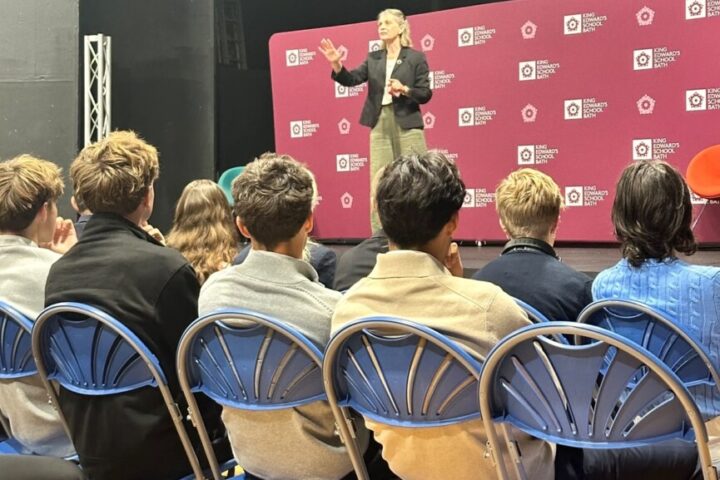
Dr Emmie, psychologist and founder of Hero Cards, shares six simple ways parents can help
Anxiety before the first day back is completely normal. New teachers, classrooms, friends they haven’t seen for a while and being away from the safe feeling of home again can lead to a slow build-up of worries about the new term.
As parents, our instinct is to make that feeling go away. But this doesn’t help children build confidence and resilience long-term. The goal isn’t to get rid of nervousness, it’s to help children feel it’s okay to have these emotions and feel safe enough to go to school anyway. This way they learn they can do hard things and be okay.
1. Make the unknown known
Anxiety tends to fill in the gaps with worst-case scenarios. So before school starts, walk through the practical details together: what time the day begins, who will collect them, where their classroom is and who their teacher is.
For younger children, a simple visual like a hand-drawn chart can be helpful. When children know what to expect, the world feels less unpredictable.
2. Rethink how you open the conversation
Asking “Are you worried about school?” can unintentionally suggest there’s something to be worried about.
Instead, try normalising it: “Lots of children feel a little wobbly about going back – that’s normal and okay. You don’t have to feel totally fine. You just have to get through the day, and I’m here to help you with that.”
This validates feelings without amplifying or trying to remove them.
3. Build a ‘When I’m Worried’ plan before they need it
This is one of the most powerful things you can do, and the key is to do it when your child is calm and relaxed, not mid-wobble.
Sit down together and practise a simple plan for when worries show up at school. Things like: take three slow breaths, find a kind adult or think of something they’re looking forward to.
Practising it ahead of time means it becomes more automatic when they actually need it.
4. Keep the night before boringly ordinary
Big emotional check-ins the evening before school can signal that tomorrow is A Very Big Deal – which can make nerves increase.
Instead, aim for calm and predictable. Something like: “Tomorrow’s a school day. I’ll help you get ready in the morning and I’ll be there to pick you up.”
5. Send a little piece of home with them
A comfort object, a note in their lunchbox or a bracelet they can touch – these are little anchors that remind children they are connected to you, even when you’re not there.
Just check with school that the item is allowed.
6. Validate the feeling – not the danger
“Don’t worry, you’ll be fine!” feels kind, but it usually doesn’t help children feel better if they don’t believe it. They need to feel understood first.
Try: “I can see you feel nervous. That makes sense. It’s not easy, but you can feel nervous and still go, it doesn’t mean something bad will happen. When you go anyway, something amazing happens – a part of you learns I can do hard things. And that feeling gets stronger each time.”
These skills teach children that their feelings are okay and they can manage them – emotional strength that lasts a lifetime.

Dr Emmie is a psychologist and the founder of Hero Cards®, a supersized card deck designed to help children aged 6–12 build emotional resilience, confidence and healthy coping skills through stories and science-backed practical tools. Find out more at loveherocards.com.