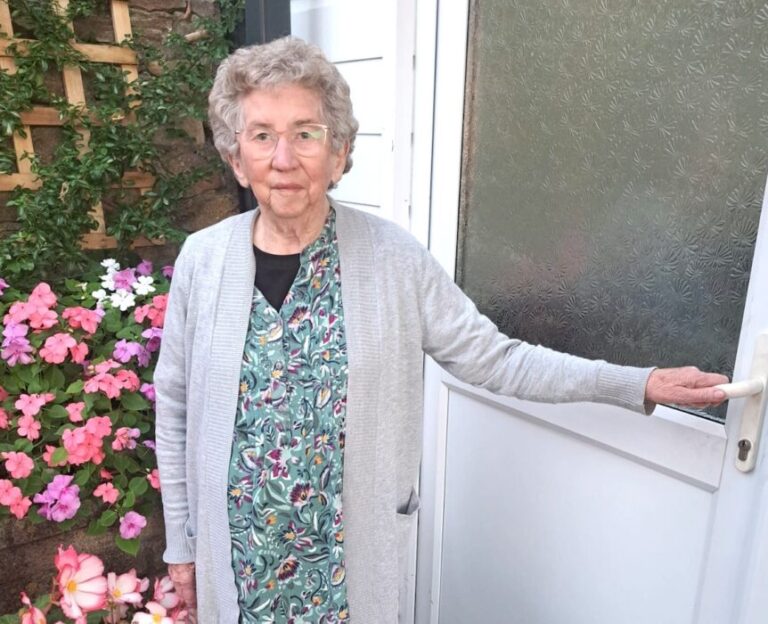
A patient treated for vulval cancer at the Royal United Hospitals Bath (RUH) NHS Foundation Trust is calling on women to seek medical advice if they experience unusual symptoms.
September is Gynaecological Cancer Awareness Month, and Mavis Bennett, from Hinton Charterhouse, is sharing her story to raise awareness and encourage early diagnosis.
Mavis first noticed irritation around her vaginal area and tried several over-the-counter remedies without success. When she visited her GP, she was referred to the RUH’s gynaecology team who diagnosed vulval cancer.
“They got me in really quickly, gave me a thorough examination and told me it was vulval cancer,” said Mavis. “I was just devastated. When you are told something like that it just turns your world upside down.”
Mavis underwent surgery at the RUH which was initially successful. However, a year later routine biopsies showed the cancer had returned, and she needed further surgery at Southmead Hospital in Bristol, including a skin graft.
“It was an incredibly stressful time, the worry and anxiety was terrible,” she explained. “I was just very fortunate that the care I received both at the RUH and at Southmead was excellent. I was so well supported the whole way.”
Now recovering, Mavis attends a support group at the RUH’s Dyson Cancer Centre for people who have had cancer. “It’s so nice to be able to talk to people who know what you’ve been through,” she said. “They’ve all had similar experiences, so it’s really helpful to just sit and chat.”
Her message to others is simple: “Please don’t be embarrassed. If anything just doesn’t feel right get to your GP straight away. The earlier you can get diagnosed and treated, the better things will be for you.”
Understanding vulval cancer
Vulval cancer is rare but can affect anyone born with a vulva, including women, trans men and people assigned female at birth.
Symptoms can include:
-
A lump or sore
-
A growth that may look and feel like a wart
-
An ulcer
-
Bleeding
-
Persistent itching that does not get better
These symptoms are often caused by other conditions, but it’s important to get them checked. If cancer is the cause, early diagnosis makes treatment more likely to succeed.
For more information on vulval cancer symptoms, visit the NHS website.
You can also find advice and support through Macmillan Cancer Support.